
coffee with alina + caleb: life in afghanistan and thailand
a singaporean-canadian couple on serving God faithfully
The Women Who Inspire series I’ve been running has been on hiatus, but I’m so glad to have it back this month!
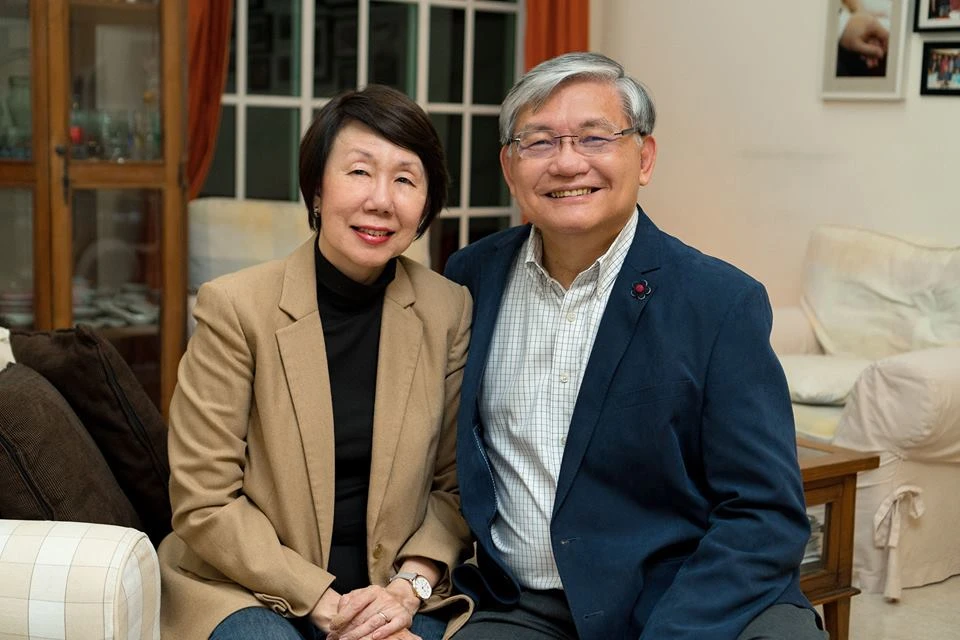
Bernice Lee is the co-founder of Graceworks, a publishing and training consultancy in Singapore. When I think of Bernice and her husband Soo-Inn, I think of how much they’ve poured their hearts into building up the next generation of believers. I think of how wonderfully giving they are with their time, and how they are so open and vulnerable in sharing their struggles. (I want to be like them when I grow up!)
In my chat with Bernice, I dig a little deeper to uncover Graceworks ‘ roots, why they’re so big on spiritual friendship, her must-read books, and what God has revealed to her in journeying through life as a mother, a mentor and a businesswoman.
Graceworks is also graciously offering a 10% discount * to my readers off any order from their online store – and it’s applicable worldwide! Just sign up for my newsletter (scroll to the end of this article) to get it – I promise not to spam you and to only share good things with you 🙂
*This promotion is now closed, but you can still subscribe to my blog for updates and future offers!
xx,
iz

“I’m a publishing consultant at Graceworks . We focus on relational transformation in church and society, so our books focus on Christian topics such as spiritual friendship, mentoring, and applying God’s truths to the challenges of daily living.
Before Graceworks, I spent 15 years at Armour Publishing which I helped to start. It was also a Christian publishing house, but with a focus on publishing crossover titles. By that I mean books for the general market that would have Christian authors with a Christian worldview, but who would not necessarily be writing “Christian” books. We did a bit of fiction but mostly non-fiction.
(This came about because) I attended a writing seminar where the trainer said: ‘If Christians will not write good books, who will?’. It got me thinking: ‘If we will not be salt and light in the book arena, then who will?’ So I chose to try and make a difference there.”
“Ours is a re-marriage—we were both widowed separately and decided to join our lives together because we felt this was something God was leading us to. But we’ve always felt that marriage isn’t just for meeting each other’s needs. There is also a ministry or vocational aspect to marriage. In our case, we brought different gifts to this union. We felt that there was a way for us to be a blessing in the larger community by bringing our respective gifts to bear in a company together.
My background’s always been in publishing so that was a no-brainer. And Soo-Inn’s gifts are in teaching and preaching. So that’s why Graceworks is a publishing and training consultancy.”
“During Soo-Inn’s time in the wilderness when he was a single parent and trying to cope with the loss of ministry, he had a sole proprietorship called Grace@Work. The only reason he could continue to minister and serve was God’s grace at work in his life, and the grace of friends who stood by him—which is why we’re so big on spiritual friendship.
When we relocated to Singapore from Kuala Lumpur in 2007, we couldn’t continue to function on the sole proprietorship back in Malaysia. So we decided to start this company in 2007. The logical sequence of things was from Grace@Work to Graceworks—because it did work!”
“ Seeing how God has worked through our weakness is such a valuable lesson for the young adults. Rather than telling them, we show them. They have to see it fleshed out. ”
“We’ve always felt that our faith is a relational one. At the heart of this faith is a relationship with God and with other men. Even in the Godhead there is relationship—the Father, Son and Holy Spirit. During the times when we were going through a rough patch, when our spouses were dying of cancer—in Soo-Inn’s case during the years after his divorce—it was our friends who kept us sane. The good Christian friends who stood by Soo-Inn, especially, were key to his survival.
In my case, I had good spiritual friends who prayed with me and lived through that tough period with me. On the last two days of my late husband’s life, two different friends stayed with me in the hospital one after the other. It’s really like walking to the end of the line, to quote Bucky from Captain America .
And because we’ve seen how friends have kept us going and kept us accountable, we realise that a lot of the things that have happened to Christian leaders who stumbled and fell were because they didn’t have close spiritual friends walking with them, in counsel with them and keeping them accountable. I think it’s almost as critical as the air we breathe, as far as we’re concerned.”
“People always say, ‘You’re right, we believe in spiritual friendship and it’s so needed, but we’re so busy, so how do we do it?’ That’s when we came up with this concept: three people meeting two hours once a month .
Don’t get too large a group because when it’s too big it’s difficult finding a common meeting time. If it’s only two people, it could get too intense; there isn’t a referee in case of disagreements. We felt three was a good number.
In recent times, many of the books we’ve read seem to reinforce this idea that the basic unit is three. Of course, we take it from the Trinity as well. And Jesus had Peter, James and John in addition to the 12, and then the 70. It would seem like a divinely inspired number.
We have ourselves been in 3-2-1 groups, and we have been sharing this at churches. In fact, there is one group in the UK called Power of Threes (POTS)—it’s a church-wide initiative so they try to get as many church members as possible to be part of these triads. Our 3-2-1 groups have begun to take root in quite a few churches locally too, because it’s a doable way of doing friendship.”
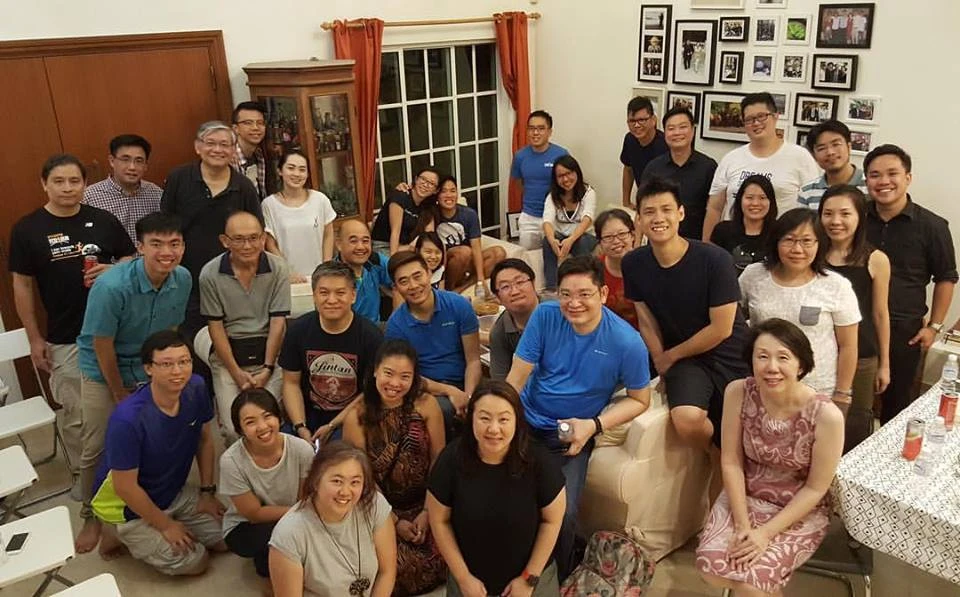
“The main impetus would be the fact that we have four young adults. You learn a lot of things from them and how to interact with them. From what we’ve seen, we realise that there are a lot of people in my generation who don’t quite get it when it comes to the younger adults, in terms of how to relate or even understand and appreciate them. I’m not saying we have got it all together, but I think we have a bit of a headstart because of our boys and how we’ve related to them.
It wouldn’t be too much of a stretch to say that my sons are my pals. I’ve been so blessed by them. During the years when I was a widow, the one thing I always remember is that one of my boys was going to go out for coffee with his girlfriend and he said: ‘Hey mum, wanna come along?’ It was not something alien in terms of awkwardness, it was very natural and something we would do.
They’ve always been told that their friends are welcome in our home, no matter who or what circumstance – no one is ever refused hospitality in our home. That’s something I always made sure they knew. They had friends who were smokers who respected the fact that we were offering hospitality, and if they needed to smoke they would go outside. It’s a two-way thing: if you show them that they’re welcome, you would be welcome in their lives too. So it was never a case of “I don’t know who my children are going out with” because they bring them home.”
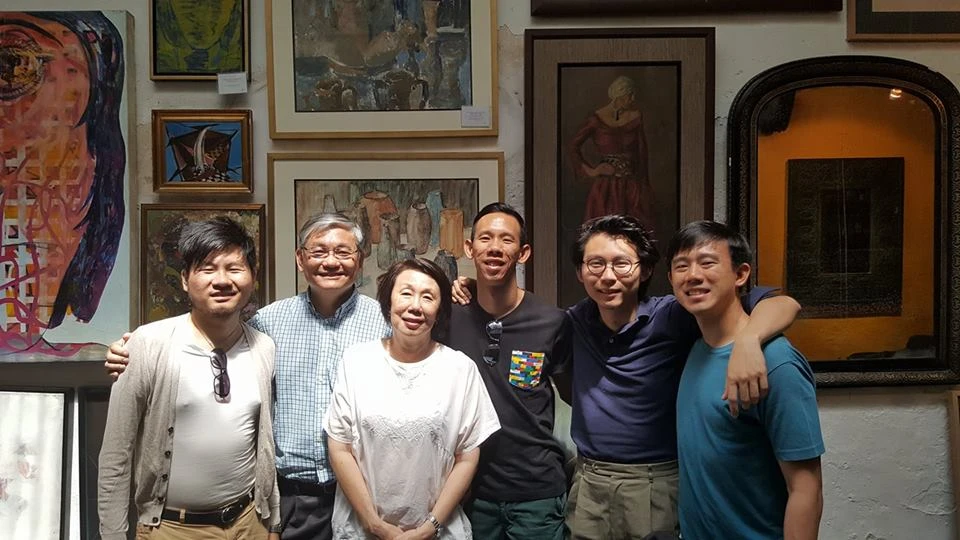
Bernice and Soo-Inn with their four sons
“It started when Soo-Inn was trying to rebuild his ministry, and he found that people of our generation were very judgmental and condemnatory. Interestingly, it was the young adults who said they had no problems with his failures as long as he was authentic, didn’t hide the facts and truths or whitewash them. And he’s someone who doesn’t know how to whitewash anything; everything’s on his sleeves.
So he found that he was better able to minister among these younger people when compared to our peers. He realised that a lot of them were crying out for mentoring, so he began various groups, one of which was called Headstart. That involved meeting up with young people to give them a headstart in their journey as Christians. Graduates Christian Fellowship (GCF) in Malaysia actually took that on and ran with it and brought it to a different level altogether, and it continues to this day.
When we got married, one of the commonalities for us was that we were both very committed to relational ministry. In my previous life I had been doing a lot of that, so it was a natural segue into doing these groups together.
We’ve found that with a lot of the young people we’ve mentored, it would seem like they’re looking for surrogate parents. Some have dual-income parents and many find that they can’t communicate with their parents. So when you find someone in your parents’ age group who is willing to listen to you and give you time—it makes such a big difference.
We believe in this, even for our own children. Very often they need input from other adults. Sometimes, you can go on and on about something but it doesn’t sink in, and then they come back and say, ‘Oh, you know Uncle said this…’. Getting reinforcement from other more objective people helps them to see what you’ve been driving at all this while.”
“It is a privilege and it’s all God. Honestly, if you ask us how we did it, I’m not sure we would’ve been so clever to come up with any of this. It’s a confluence of events, circumstances and God’s hand in all of it. And we’ve learnt so much from the young people—it’s never just a one-way relationship.
In my generation, if you’re a Christian leader you have to be perfect, on top of the game, and you can’t show your weaknesses. But from interacting with these young adults, we’ve tasted the reality of what the Bible says—that it’s when you’re weak that He is strong. And seeing how God has worked through our weakness is such a valuable lesson for the young adults. Rather than telling them, we show them. They have to see it fleshed out.”
“ Christian publishing is such a niche area and Singapore is such a small market. But God’s been bringing us projects that we never would’ve expected. You can say it’s been an exhilarating journey. ”
“It was a kick in the butt from God. We were told by someone who used to worship in Soo-Inn’s church that there was an organisation in Asia that had fairly deep pockets in terms of helping Christian publishers to be set up. This person said he could get us access to seed money to get this going.
So we burned our bridges—I had quit from my previous company—and started Graceworks in preparation for this whole enterprise proceeding. But the money that was promised didn’t come on time, and it kept being postponed. Finally, when we got down to the stage of actually drafting contracts and formalising things, he finally said: ‘We’ve looked through our constitution and we’re not allowed to lend out funds’. So that source of start-up funds was removed, but we’d already begun the journey.
We decided to continue by faith, and I think this was God having a sense of humour, because I had always felt in my previous company that we were so fixated on the bottomline and the faith element was almost absent. We had to scramble around asking for people who would consider investing. And God also provided a way because our apartment at Farrer Court was en bloc-ed, so there was a sum of money we could put into it.

” 3-2-1: Following Jesus In Threes , which is going into its sixth re-printing.
We also published a book this year on how we can build bridges with cultural Chinese who are of a different faith system. It’s called Jesus: The Path to Human Flourishing , which actually builds on a saying in Confucianism. The author has expanded on this to show how Jesus is the true path. Without coming across as holier-than-thou, she gives considerable coverage to each of the faith traditions, such as Buddhism, Taoism, Confucianism, what their commonalities with Christianity are and how we can build bridges. If we are to love our neighbour, we need to know our neighbour. That’s a book I’m pretty excited about, and it’s doing very well.
There are also two books on Workship : how to bring the worship of God to the workplace, and how to live out your faith in the workplace. These are by an Australian academic-theologian-marketplace practitioner.
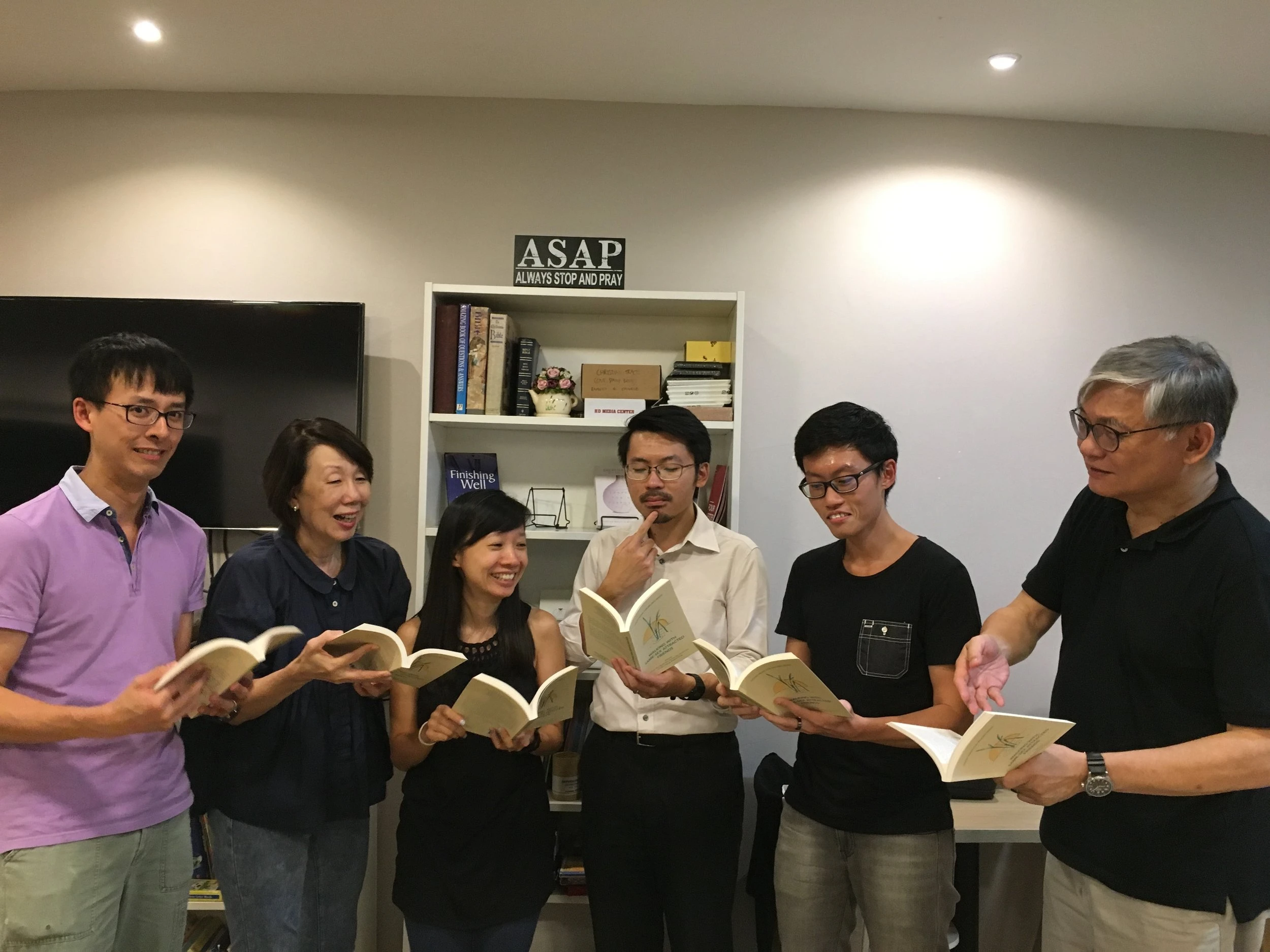
The other book I’m really excited about is Walking with Same-sex Attracted Friends . It’s the start of a series of titles called “Good News For Bruised Reeds”, because we’re all bruised reeds in one way or another. So what is the good news for each sub-group of bruised reeds? We are actively trying to decide on the next group to focus on, so watch this space!”
“We sold out of our first run of 2,000 copies in less than two months, and we went into our first reprint. I think there’s a big need there.
The book is not a theological tome, and neither is it fiction. It’s actually divided into three sections. The first contains actual stories of those grappling with the issue and trying to see how they can, with integrity, live out their faith and still acknowledge that this is who they are. The second section is written by friends who’ve walked with them, whether they’re cell leaders, parents or counsellors, so you get another perspective. The final section is from pastors who’d like to see change in their churches.
We hope this book will start conversations that can be life-giving for all concerned, with no compromises on the fact that we still believe in the heterosexual norm for marriage.
The last thing I want to do is a triumphalistic book. There is a place to rejoice with people who have found a way to walk this journey with integrity. It’s really great to see how God has worked in their lives. And yes, there is a place for those who have successfully navigated this journey, but there are also those who are still struggling, and it’s important for people to hear from others who are also still grappling with their issues.”
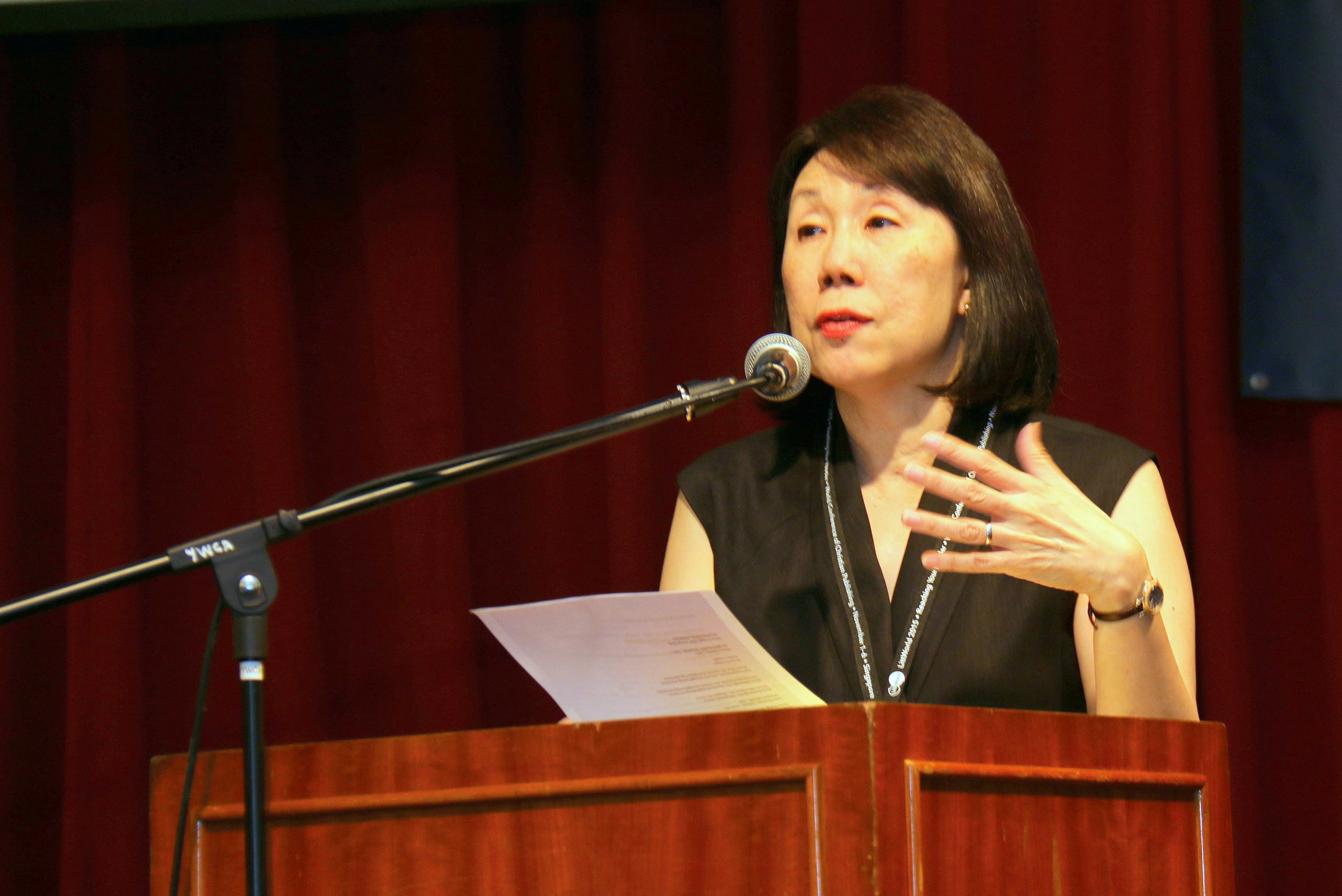
Bernice speaking at the opening of the LittWorld conference, a triennial event on Christian publishing, in 2015
“There have been lots of times, especially when deadlines crowd in and you’re struggling to stay above everything and wondering, ‘Can I continue doing this forever?’. But then the still small voice of God reminds me that I’m not doing this for my health. There really is another motivation to do this: because God has called me. It’s been a long journey of coming to realise that it is a calling, but because it’s become a reality for me that it is a calling, that is my pillar of strength. It’s not just about me, it’s about what God wants to do.”
“That God is bigger than my problems, and that He will never owe you. God is no one’s debtor. He may not cause things to fall into place according to what you think should happen, but when things finally are resolved or a project is completed or something is launched, on hindsight you realise that this really was for the best, and He had a plan all along. I just wasn’t privy to it.
And I’m just reminded of all the heroes of the faith who also had to live lives like that. Joseph didn’t know what was around the corner. Neither did Moses. This is not a case of me equating myself with them, but learning lessons from their lives.”
“We have a few more books in the pipeline, but the most immediate one is The Dao of Healing . This was not something we pursued but God brought it to us. I’m excited about this because for the longest time, and especially in charismatic circles, we’ve always had a basic distrust of anything to do with TCM and acupuncture, i.e. Chinese traditional forms of medical treatment.
But the author, a Singaporean man with a PhD in early church history who also uses TCM, wants to dispel our misunderstandings about the roots of both Chinese and Western medicine. We often equate Western medicine with a Christian healthcare model, while Chinese medicine is based on Taoism. His basic premise is that what we think is a Christian-based form of medicine isn’t even that, because Western medicine is based on Greek medicine. All doctors take a Hippocratic oath, and Hippocrates was Greek.
So through his research he brings out the chronology and history of how Western medicine got to today and how our basic concepts of medicine between East and West are very different. And because we don’t understand how Chinese medicine came about, and because it’s not as empirical as Western medicine, we say it’s less scientific and akin to shamanism. But it isn’t, you see, and he gives a lot of substantiation for his premise.
Again, like the other book on Chinese faith traditions, if we want to engage them, we need to understand them. We need to love our neighbour before we can even dialogue with them. So this book continues with the dialogue and helps us understand that there are good things about Chinese medicine we can adopt and embrace. There are potential dangers too, so how do we engage with them and not throw the baby out with the bathwater?
The book is launching on Thursday, 23 August and will be followed by a workshop on Christian perspectives of Chinese medicine. The author and his consultant, a Western-trained doctor from Mali, Africa, who now has a PhD in TCM in China, will be present for both the launch and the workshop.”
a singaporean-canadian couple on serving God faithfully

for christina and michelle

and why we can’t live without it

an asian woman speaks up
an invitation to a christian spiritual practice

an imaginary response to mark 7

what’s speaking life into my life right now

a note of encouragement for students everywhere

2020 life lessons from my friend alice

life as a black christian in canada

re-thinking mission and missional living
in the valley of dry bones

a covid-19 prayer

Lord, have mercy
the Vancouver-based artist to put on your radar

learning to trust in His faithfulness
how journalling helps you invest in eternity

prayer guides, devotionals and bible study tools at your fingertips

the importance of being intentional

re-thinking what being productive means